Technology
Instrument. Intelligence. System.
ONYX unites precision airflow hardware with multimodal machine learning and a structured management platform — each layer engineered to make the next one more informative.
01ONYX Device
A connected instrument for the forced breath.
The ONYX device uses airflow sensing hardware to capture pulmonary measurements such as peak expiratory flow and related respiratory parameters, transmitting each session to the ONYX research platform.
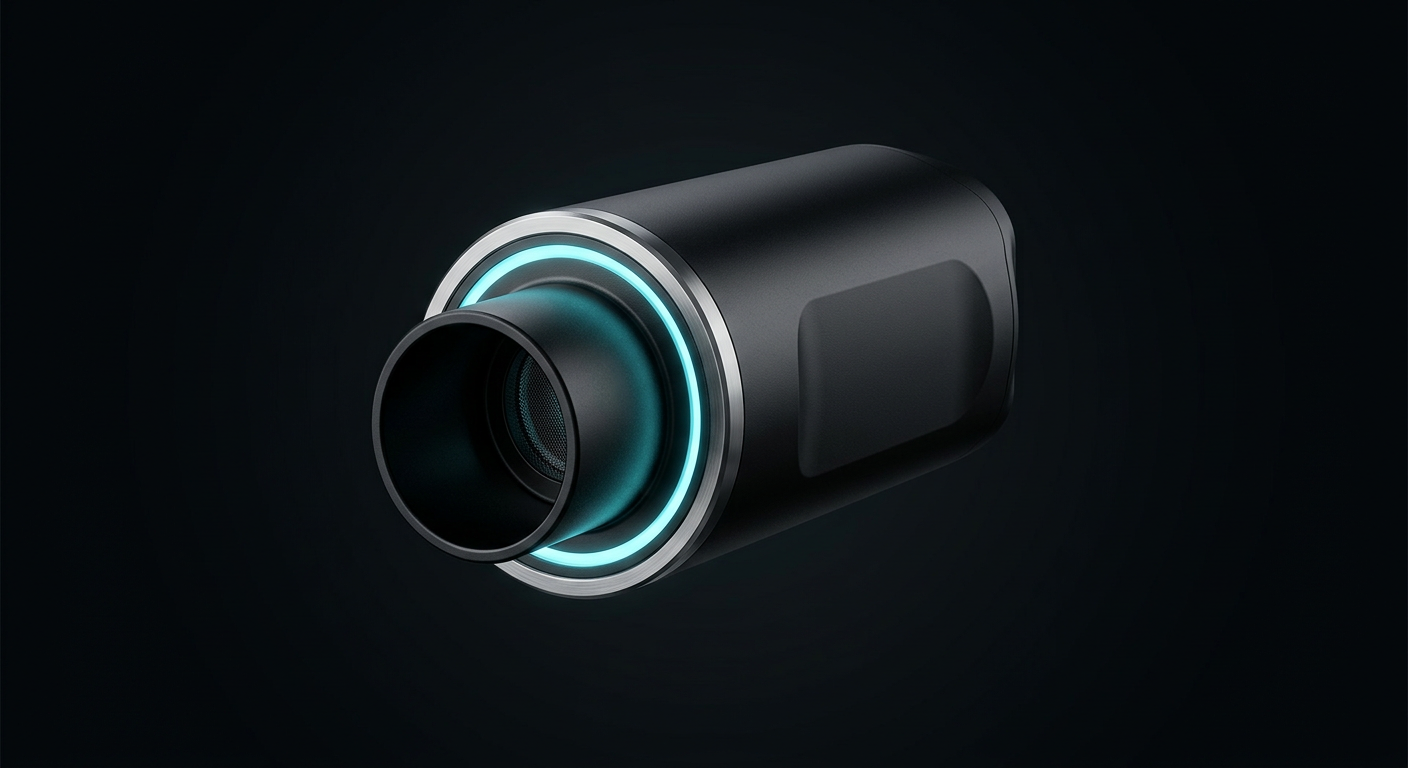
Measured, not estimated.
Each maneuver is sampled across its full duration, so the system records the shape of the expiratory curve — not only its peak. Parameters below are captured or derived for research purposes and are undergoing technical characterization.
- PEF L/min
- Peak expiratory flowMaximum flow achieved during a forced exhalation.
- FEV₁ L
- Forced expiratory volume, 1 sVolume exhaled in the first second of the maneuver.
- FVC L
- Forced vital capacityTotal volume exhaled during a full forced breath.
- FEV₁/FVC %
- RatioRelative index associated with airflow obstruction.
- PEFv %
- PEF variabilityDiurnal and day-to-day variation across sessions.
- Q flag
- Maneuver qualityEffort and technique indicators for each attempt.
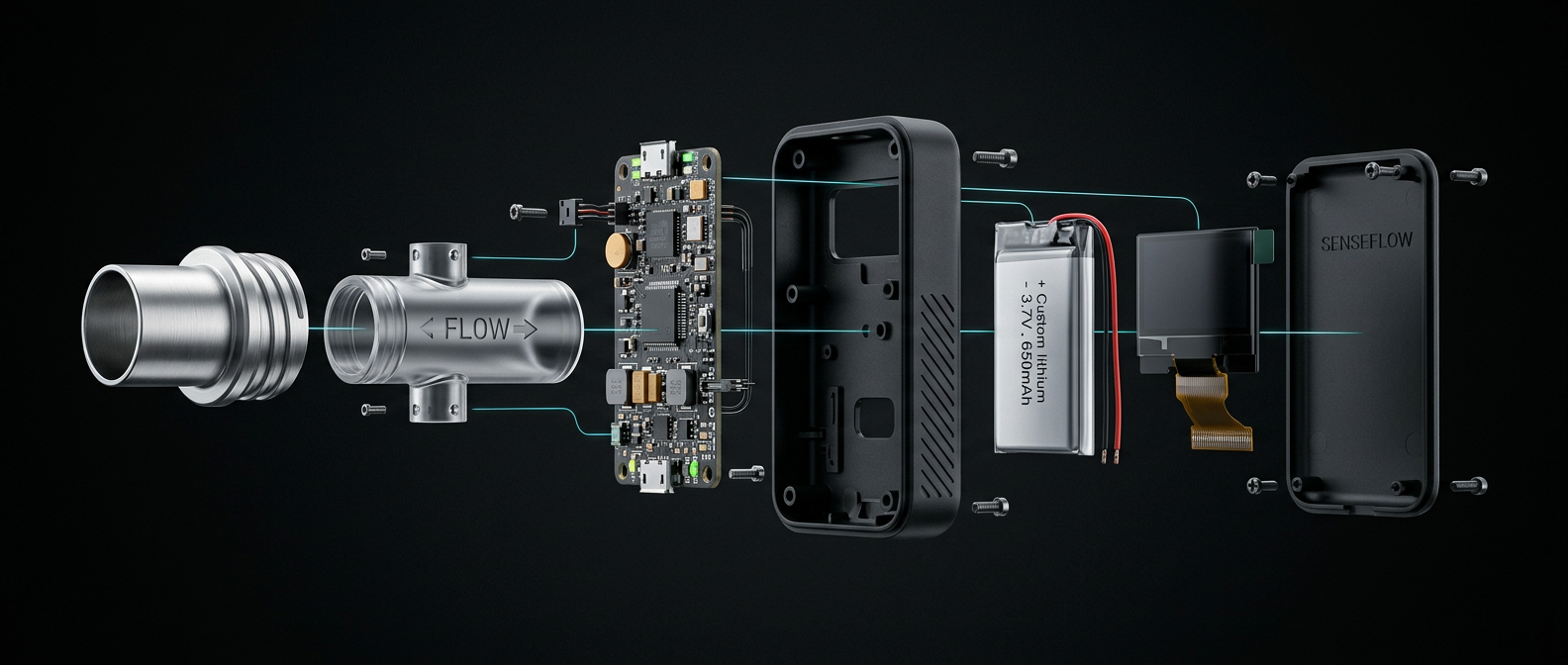
Hardware architecture
Exploded view
- 01Precision-molded mouthpiece and conditioned flow channel
- 02Airflow sensing element with high-rate sampling
- 03Embedded microcontroller with on-device signal processing
- 04Low-energy wireless module for session synchronization
- 05Rechargeable power cell and charge management
- 06Anodized enclosure with brushed silver bezel
02AsthmaNET · Multimodal AI research
Four signals. One model of individual respiratory risk.
AsthmaNET is ONYX’s research program in multimodal machine learning. It integrates respiratory airflow measurements, environmental conditions, cough audio, and genomic information to investigate personalized respiratory risk assessment and predictive modeling.
Temporal convolutional encoder
Respiratory airflow
Peak expiratory flow and derived airflow parameters captured by the ONYX device, modeled as longitudinal time series to characterize trends and variability.
- PEF trajectories
- Diurnal variability
- Effort-quality flags
Research questions
AsthmaNET is an active research model. Its outputs are investigational and are not used to make clinical decisions.
- Q1
Can fused airflow and environmental signals anticipate deterioration earlier than airflow alone?
- Q2
Do cough acoustics carry information complementary to peak expiratory flow?
- Q3
How might genomic features modulate an individual’s response to environmental exposure?
- Q4
Which patient phenotypes emerge from unsupervised analysis of multimodal trajectories?
03ACMS · Asthma Control & Management System
Longitudinal clarity for patients and care teams.
ACMS transforms continuous measurements into structured, contextual summaries — personal-best tracking, environmental awareness, adherence logging, and exportable reports designed to support, never replace, clinical judgment.
Peak flow · % of personal best
84%
Air quality
PM2.5 context
Moderate
Pollen
Tree pollen
Elevated
Humidity
Ambient
62%
Controller adherence
Self-reported · 26 of 30 days
Contextual notice
Pollen elevated — measurement reminder
Clinician summary
Structured export for care visits
04System architecture
From exhalation to insight.
- 01
Sense
ONYX device
- 02
Process
On-device DSP
- 03
Sync
Mobile companion
- 04
Store
Encrypted research cloud
- 05
Model
AsthmaNET
- 06
Manage
ACMS
Data handling is designed around encryption in transit and at rest, participant consent, and de-identification for research use.
Explore the science behind the system.
Collaborate with ONYX on validation, datasets, or integration research.